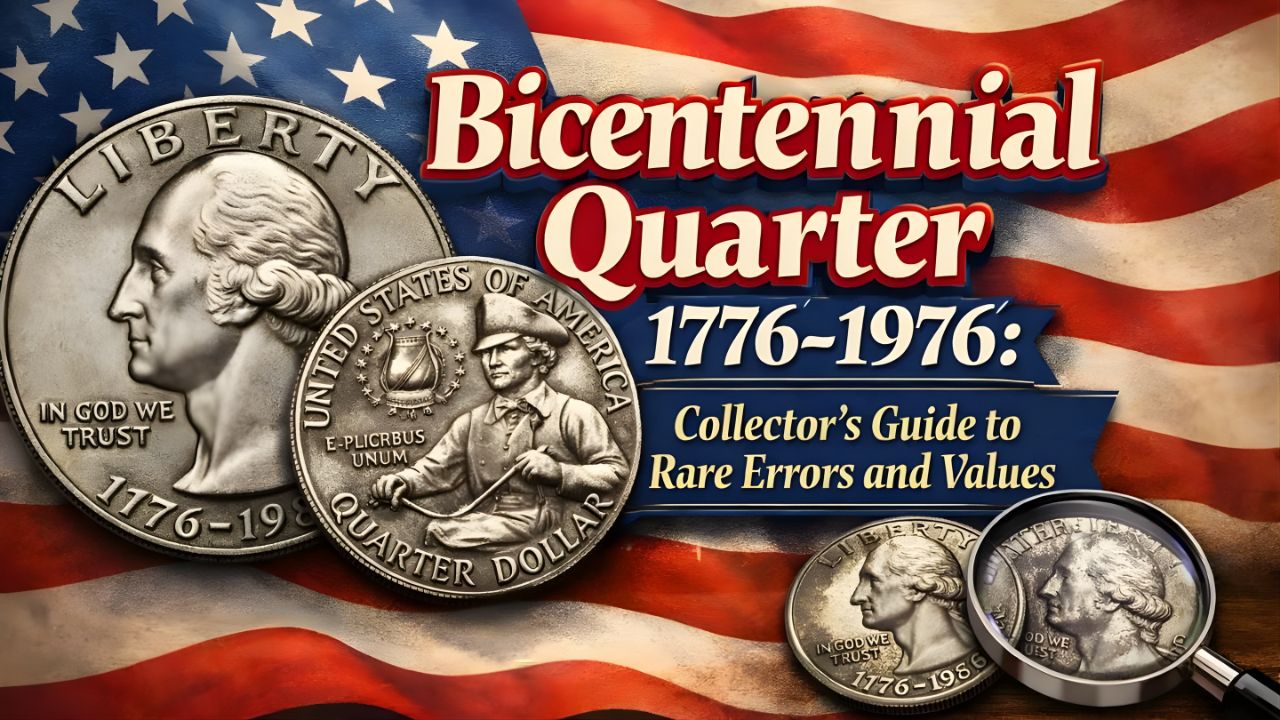
1776–1976 Liberty: The 1776–1976 Liberty Quarter, widely known as the Bicentennial Quarter, was created to mark two centuries of American independence. Unlike standard quarters, this commemorative issue stands out with a special reverse design showing a colonial drummer alongside a victory torch and thirteen stars representing the original colonies. Because of this symbolism and its connection to a major national milestone, the coin has remained popular with both history enthusiasts and coin collectors. Interest increases even more when rare mint errors, silver compositions, or pristine conditions come into play.
Bicentennial Quarter Value Overview by Type and Condition
| Quarter Type | Condition | Estimated Market Value |
|---|---|---|
| Copper-nickel circulation | Worn or circulated | $0.25 to $1 |
| Copper-nickel circulation | Uncirculated | $2 to $5 |
| Proof copper-nickel | Proof | $5 to $10 |
| 40 percent silver | Uncirculated | $10 to $20 |
| Error or variety issues | Varies | $50 to $1,000 or more |
Historical Background
The Bicentennial Quarter was produced during 1975 and 1976, yet every example carries the dual date 1776–1976. This was part of a larger commemorative coin program that also included special half dollars and dollar coins. Although the U.S. Mint released hundreds of millions of these quarters, ensuring they were widely used in daily transactions, only a small percentage possess qualities that make them significantly valuable today.
Design and Symbolism
The front of the coin maintains George Washington’s portrait originally designed by John Flanagan, preserving continuity with earlier quarters. The reverse, created by Jack L. Ahr, was selected through a national design competition. The colonial drummer reflects the spirit of the American Revolution, while the torch and stars reinforce themes of unity, freedom, and independence. This distinctive artwork is the primary visual feature that separates Bicentennial Quarters from regular issues.
Minting Methods and Metal Composition
Bicentennial Quarters were struck in multiple formats. Most were made for everyday use in copper-nickel clad metal. Collectors could also purchase special versions struck in 40 percent silver, as well as proof coins produced with sharper detail and reflective surfaces. These differences in metal content and finish play a major role in determining long-term value and collector demand.
Typical Values Found Today
The majority of Bicentennial Quarters still encountered in pocket change are common copper-nickel pieces and usually hold little value beyond face value. Coins that avoided circulation and retained mint-state surfaces tend to sell for modest premiums. Proof versions and silver issues attract higher prices due to their limited availability and superior appearance, especially when well preserved.
Rare Errors and Notable Varieties
Mint errors are among the most desirable aspects of Bicentennial Quarter collecting. Errors such as doubled dies, off-center strikes, clipped blanks, or coins struck on incorrect planchets are far scarcer than standard issues. These unusual production mistakes can greatly elevate a coin’s worth, sometimes reaching hundreds or thousands of dollars depending on rarity and overall condition.
What Determines a Bicentennial Quarter’s Value
Several elements influence how much a Bicentennial Quarter may be worth. Condition is critical, as coins with minimal wear and sharp details command higher prices. Rarity also matters, particularly for error coins or silver versions. Collector demand remains steady because of the coin’s historical significance, and documented provenance or original mint packaging can further enhance appeal.
Auction Results and Record Sales
Although most Bicentennial Quarters sell for modest amounts, auction history shows that exceptional examples can achieve impressive prices. Coins with dramatic errors or top-tier proof grades have sold for several hundred dollars. In rare instances, unique varieties with strong collector interest have reached four-figure sale prices.

Tips for Collecting Bicentennial Quarters
Collectors interested in this series often focus on uncirculated or proof coins, as these tend to hold value better over time. Silver issues are especially desirable due to lower mintage numbers. Learning to recognize common error types can also be rewarding. Proper storage in holders or albums is essential to preserve condition and prevent damage.
How to Identify Valuable Examples
Careful inspection is key when examining Bicentennial Quarters. Look for sharp lettering, full design details, and any unusual features that might indicate an error. Weight and color can help distinguish silver issues from clad coins. When in doubt, professional grading services can confirm authenticity and assign an official grade that helps establish market value.
Market Outlook for Bicentennial Quarters
The collector market for Bicentennial Quarters remains stable. While common circulated coins are unlikely to see dramatic appreciation, rare errors and high-grade examples continue to draw interest. As time passes and fewer pristine pieces remain available, demand for top-quality coins may gradually increase.
Selling a Bicentennial Quarter
Owners looking to sell can explore several options, including local coin shops, coin shows, online marketplaces, or auctions. Rare or high-value pieces often perform best at auction, where competitive bidding can drive prices higher. Obtaining a professional appraisal or grading beforehand can help ensure realistic pricing.
Final Verdict
The 1776–1976 Bicentennial Quarter is both a historical keepsake and a collectible with real market potential. While most examples remain inexpensive, silver issues, proof coins, and genuine mint errors can be worth significantly more. For collectors, these quarters offer a blend of patriotic symbolism and the excitement of uncovering hidden value.
