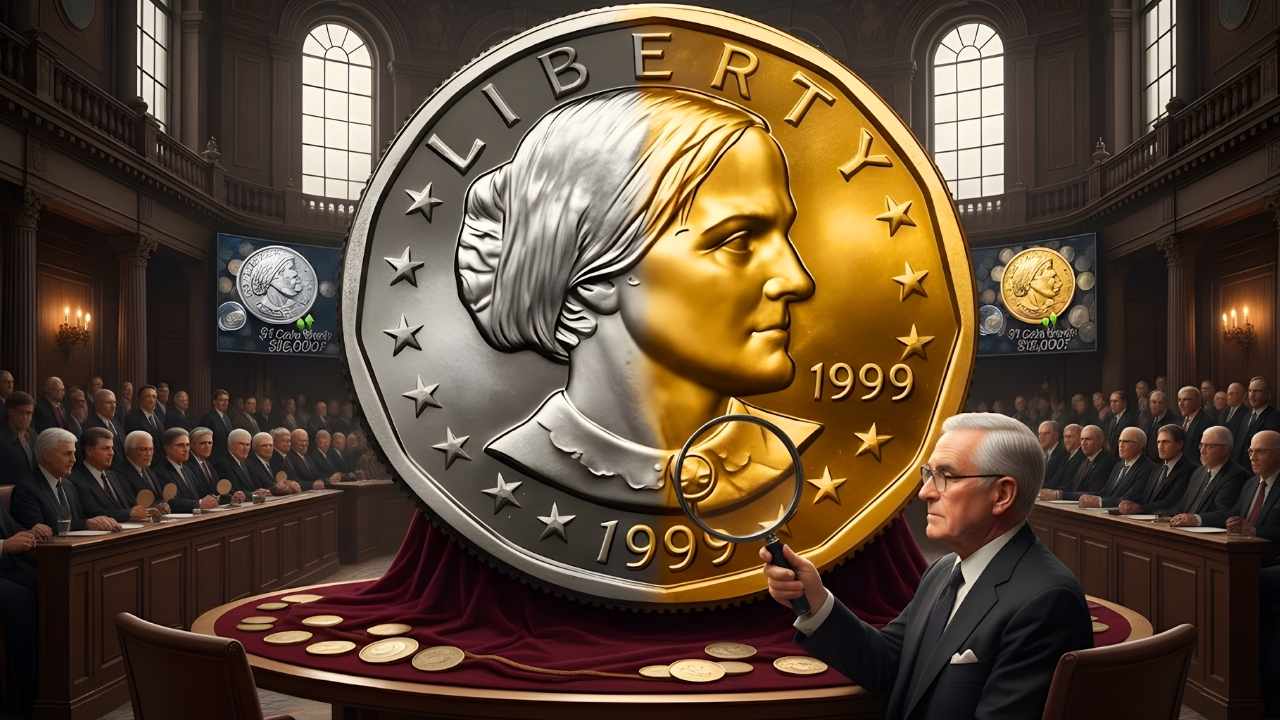
Susan B. Anthony Dollar At first glance, the 1999-P Susan B. Anthony Dollar may seem ordinary, but its place in modern numismatics is far more intriguing. Revived briefly in 1999 to fill a gap before the Sacagawea dollar was introduced, this coin has since gained collector appeal due to rare mint errors, high-grade survivors, and varieties that can command impressive premiums.
Why the 1999-P Susan B. Anthony Dollar Matters
Originally minted from 1979 to 1981, the Susan B. Anthony dollar was reissued in 1999 by the Philadelphia Mint, which struck nearly 30 million coins. Most entered circulation and were heavily used, leaving few pristine examples. This scarcity of high-grade coins has made them increasingly desirable to collectors.
What Drives Value in 2026
Several factors influence the coin’s value. Condition is the most obvious, with worn coins remaining common while pristine pieces are scarce. Professional grading adds credibility, while minting errors significantly increase desirability. Visual appeal also matters, with collectors favoring coins that show strong strikes and minimal distractions.
Key Value Ranges for Collectors
Circulated coins typically trade close to face value, while uncirculated examples bring modest premiums. Certified coins in MS65 and above stand out, and MS68 coins are extreme rarities pursued by registry set collectors. Error coins often exceed standard price guides, selling based on uniqueness and demand.
Rare Varieties Collectors Seek
Sacagawea Planchet Error
A famous variety involves the Susan B. Anthony dollar struck on a Sacagawea planchet. These coins display a golden color and different weight. Confirmed examples have sold for thousands, sometimes exceeding $16,000.
Off-Center Strike Errors
When blanks are misaligned during striking, off-center errors occur. If the date remains visible and the error is dramatic, values range from a few hundred dollars to more than $2,000.
Double Strikes and Broadstrikes
Coins struck twice or without the retaining collar show distorted shapes or overlapping designs. These unusual appearances make them popular with error collectors, often selling for several hundred dollars.
High-Grade Mint State Coins
Because most circulated, nearly flawless examples are rare. Coins graded MS68 are condition rarities and can command four-figure prices even without errors.

How to Identify a Valuable Coin
Confirm the 1999 date and P mint mark. Look for unusual color, especially golden tones that may suggest a planchet error. Check alignment, edge shape, and design details under magnification. Never clean the coin, as this reduces its value. If anything appears unusual, professional grading is strongly recommended.
Should You Sell or Hold in 2026
Common circulated coins may not yield much beyond face value. However, error coins and top-grade examples continue to gain interest. Holding a rare or high-quality example and having it graded could prove beneficial as modern coin collecting expands.
Final Verdict
The 1999-P Susan B. Anthony Dollar Value in 2026 ranges from everyday coins worth a dollar to rare pieces valued in the thousands. While most remain common, mint errors and exceptional Mint State coins prove that modern U.S. issues can still hold serious collector value. Careful inspection and authentication are the keys to unlocking that potential.
Disclaimer
This article is intended for informational purposes only. Coin values depend on condition, rarity, certification, and market demand, all of which can change. Prices mentioned are not guarantees. Always consult certified grading services or experienced numismatic professionals before making buying, selling, or investment decisions.