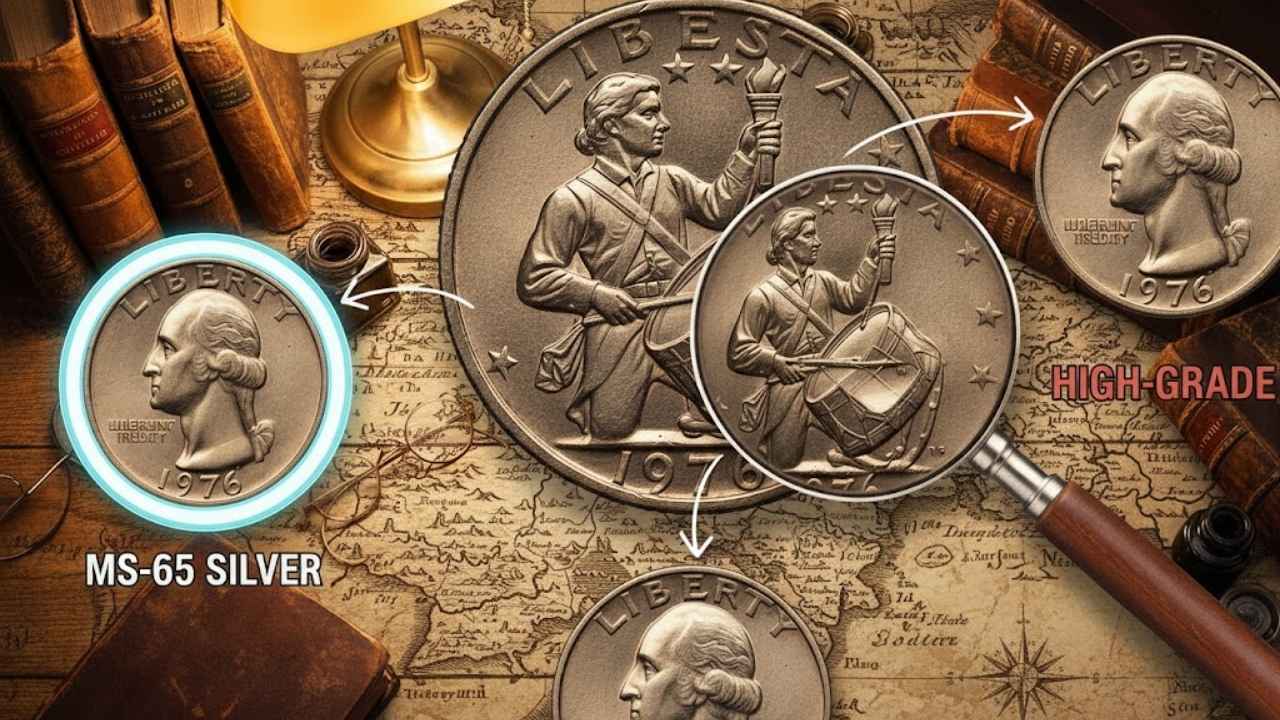
1976 Bicentennial Quarters Value: The year 1976 marked a historic celebration for the United States as the nation honored 200 years of independence. To commemorate this milestone, the U.S. Mint introduced a special coin series, with the Bicentennial quarter becoming the most iconic. This quarter replaced the traditional eagle reverse with a colonial drummer holding a torch, encircled by thirteen stars representing the original colonies. Designed by Jack L. Ahr, the coin carried the dual date 1776–1976, making it instantly recognizable and a symbol of national pride.
Types of 1976 Bicentennial Quarters Worth Collecting
| Mint Location | Mint Mark | Composition | Collector Appeal |
|---|---|---|---|
| Philadelphia | None | Copper‑nickel clad | High‑grade circulation finds |
| Denver | D | Copper‑nickel clad | Strong strikes and error varieties |
| San Francisco | S | Clad proof | Mirror finish collector coins |
| San Francisco | S | 40% silver | Precious metal rarity |
This table highlights the key mint varieties of Bicentennial quarters, each offering unique appeal to collectors depending on origin, composition, and condition.
Philadelphia No Mint Mark Bicentennial Quarter
The Philadelphia Mint produced Bicentennial quarters without mint marks in massive quantities. Most remain common and worth face value, but uncirculated examples with sharp details are scarce. Coins graded MS67 or higher can command significant premiums, making roll searching for pristine Philadelphia issues a popular pursuit.
Denver Mint Bicentennial Quarter
Denver Mint quarters, marked with a small D, were also widely produced. Collectors often note stronger strikes compared to Philadelphia coins. High‑grade Denver issues are desirable, especially those free from contact marks. Error varieties such as doubled dies, off‑center strikes, and clipped planchets can dramatically increase value.
San Francisco Clad Proof Bicentennial Quarter
San Francisco produced clad proof quarters specifically for collectors. These coins feature mirror‑like fields and frosted designs, offering exceptional visual appeal. While most are affordable, examples graded PR69 or PR70 are rare and highly valued. Some proofs even entered circulation, adding intrigue for collectors.
San Francisco 40 Percent Silver Bicentennial Quarter
The most valuable Bicentennial quarter is the San Francisco 40% silver version, sold in special mint sets. Its intrinsic silver content already exceeds face value, but collector demand pushes prices much higher. High‑grade silver Bicentennial quarters can sell for hundreds or even thousands of dollars, often serving as the centerpiece of Bicentennial collections.
Why 1976 Bicentennial Quarters Matter to Collectors
These coins represent more than currency; they embody history and patriotism. The drummer design evokes Revolutionary War imagery, while the dual date connects past and present. Collectors value Bicentennial quarters for their accessibility, historical significance, and the challenge of finding rare varieties.
How to Identify Valuable Bicentennial Quarters
- Check mint marks to determine origin.
- Examine strike quality and surface preservation.
- Look for minting errors such as doubling or off‑center strikes.
- Identify composition, especially silver issues.
- Seek professional grading for authentication and accurate valuation.
Market Trends for Bicentennial Quarters
Interest in Bicentennial quarters remains strong due to their historical importance. While most trade at face value, auction records show high demand for top‑grade examples. Coins graded MS67 and above often sell for hundreds, while silver and proof issues continue to attract collectors. With the U.S. approaching its 250th anniversary, demand for Bicentennial‑era coinage is expected to rise further.
Final Verdict
The 1976 Bicentennial quarter is a lasting tribute to America’s 200th anniversary. Though billions were minted, select varieties—Philadelphia high‑grade coins, Denver errors, San Francisco clad proofs, and San Francisco silver issues—offer genuine collectible value. Whether collected for history, artistry, or investment, these coins remain an essential part of U.S. numismatics.
Disclaimer
This article is for informational purposes only. Coin values vary based on condition, rarity, and market demand. Readers should consult certified numismatists or grading services before buying, selling, or appraising rare coins.
